
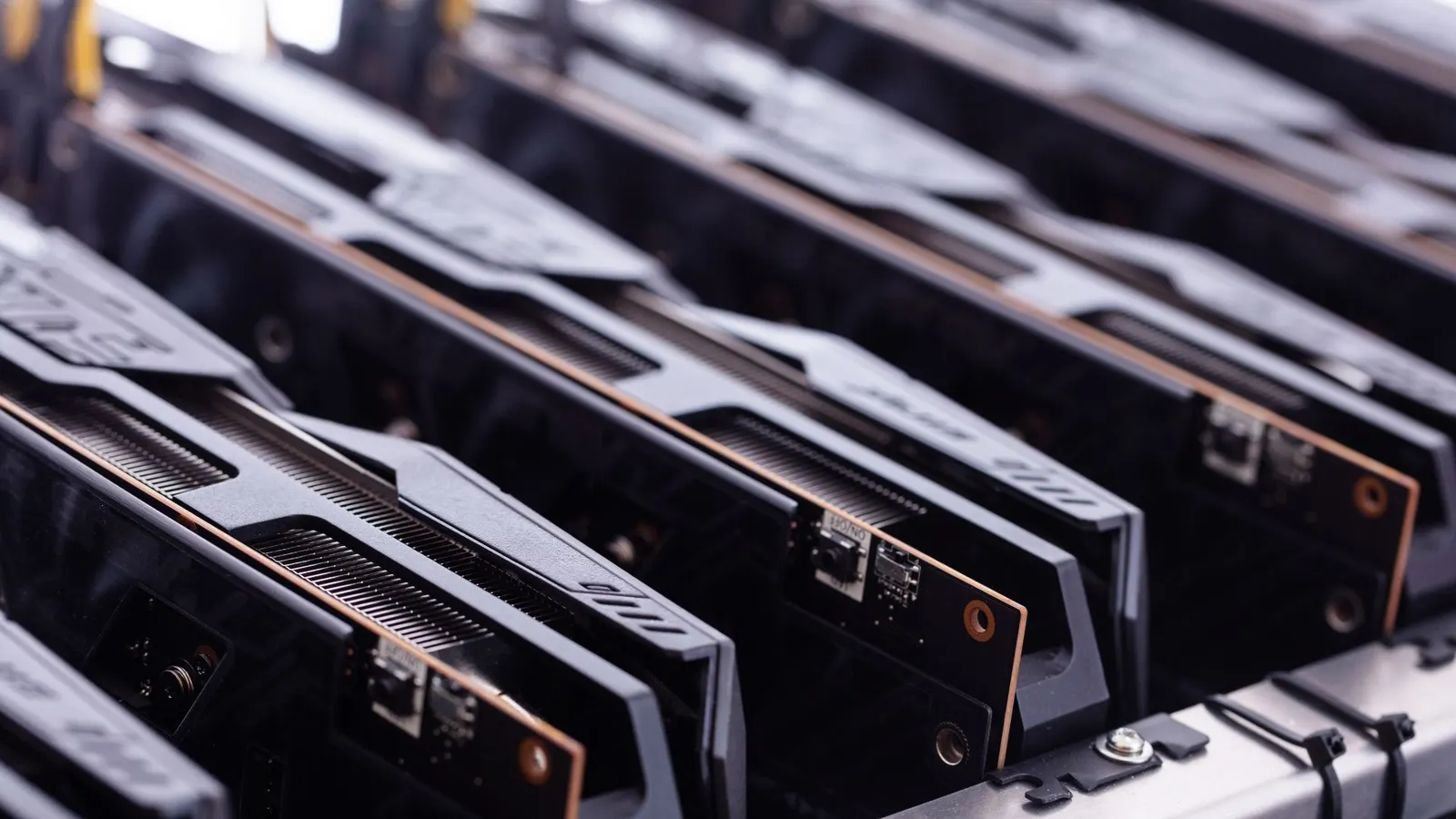
A dedicated GPU server, or graphics processing unit cluster, is a group of dedicated servers with graphics processing units (GPUs) that are connected to each other to form a single high-power system. This type of system is typically used for graphics-intensive applications, such as 3D rendering or gaming. By connecting several dedicated servers, a GPU cluster can deliver far more power than a single server. This makes them ideal for demanding applications that require a lot of processing capacity. In addition, GPU clusters can be scaled up or down as needed, which makes them very flexible and adaptable. As a result, they are an increasingly popular choice for businesses and organizations that need a high-performance computing solution.
How does it work?
GPU clusters are increasingly popular for a variety of workloads, such as machine learning, deep learning and high-performance computing. A GPU cluster is a group of computers with GPUs that are connected to each other to work on the same task. Each computer in the cluster has its own GPU, and Cluster Manager software distributes the task across the GPUs. The advantage of using a GPU cluster is that it can deliver significant performance gains over a CPU cluster. In addition, NVIDIA GPU clusters are much easier to set up and manage than CPU ones. For these reasons, GPU clusters are an ideal solution for many workloads.
Advantages of using a cluster
A GPU cluster is a computer system that contains several graphics processing units (GPUs). While a single GPU can boost the performance of a CPU by several orders of magnitude, a GPU cluster can provide an even greater increase in computing power. For example, the RTX A5000, a high-end Nvidia GPU, has a peak performance of 27.77 teraflops in FP32. However, when four RTX A5000s are connected in a cluster, the total peak performance of the system soars to 111.08 TFlops FP32. This makes GPU clusters ideal for applications that require large amounts of processing capacity, such as 3D rendering, scientific simulations and machine learning. In addition, GPU clusters tend to be more energy efficient than traditional CPU-based systems, which makes them an attractive option for data centers and other high-compute environments.
Disadvantages
A GPU cluster is a type of computer that uses several GPUs to process information. While this can provide a significant boost in processing capacity, it also has several drawbacks. First, clusters can be expensive to set up and maintain. Second, they need a lot of power to run, which can mean higher operating costs. Third, clusters can be difficult to manage, since each GPU requires its own drivers and software. Finally, clusters can be noisy and produce a lot of heat, which makes them hard to use in some environments. Although GPU clusters have their advantages, you should consider these drawbacks before investing in a system of this kind.
When should you use one?
A GPU cluster is a group of computers connected to each other to share computing power. This type of system is typically used by businesses and organizations that need to carry out large-scale tasks that require a lot of processing capacity. GPU clusters can be used for a wide variety of tasks, such as video rendering, 3D modeling and scientific research. One of the main advantages of using a GPU cluster is that it can considerably reduce the time needed to complete a task. In addition, GPU clusters can also improve the quality of results by distributing the workload across several computers. As a result, businesses and organizations that rely on GPUs for their computing needs can see a significant improvement in productivity by using a GPU cluster.
A computer cluster is a powerful tool for data-intensive applications. It can deliver faster results than a single computer and can be scaled to accommodate more users or larger datasets. However, using a GPU cluster has some drawbacks that you should consider before making a purchase. Even so, when used properly, a GPU cluster can be an essential part of your data processing arsenal.
A business cluster is a group of companies that are geographically concentrated and work in the same sector, which allows them to share resources and knowledge to improve their competitiveness in the market. In the case of a high-tech cluster, such as a cluster of computers, servers and graphics cards, the idea is to create a data processing center with high availability and performance.
In this sense, a GPU cloud cluster refers to a set of servers equipped with Graphics Processing Units (GPUs) that are designed to handle compute- and processing-intensive workloads, such as those required by artificial intelligence and machine learning applications. These clusters are configured to provide proper load balancing, so that work is distributed evenly across the different servers and system availability is guaranteed.
Besides the number of GPUs, it is also important to consider the RAM and the operating system that will be used to manage resources and processing capacity. A good GPU cloud cluster should be able to deliver high availability, scalability and performance to meet the demands of artificial intelligence applications and other processing- and memory-intensive workloads.
In short, a GPU cloud cluster is a high-capacity, high-performance data processing solution based on servers configured with GPUs, RAM and an operating system optimized for the task. These clusters are essential for artificial intelligence, machine learning and other processing-intensive projects that require a high level of availability and performance.